


Life on Earth demonstrates an astonishing diversity of forms and survival strategies. Particularly impressive are ecosystems that exist in extreme conditions — high temperatures, pressures, radiation, severe droughts, or complete absence of light. In such environments, survival is often impossible without close interactions between different organisms. It is in these circumstances that symbiosis becomes a key mechanism of adaptation and resilience.
Symbiotic relationships in extreme environments are especially interesting to science because they reveal fundamental principles of life organization. These systems show how cooperation between organisms allows them to overcome environmental limitations and form stable ecosystems where life would otherwise seem impossible. Studying these interactions not only helps us understand life on Earth but also broadens our understanding of the potential existence of life elsewhere in the universe.
The Nature of Symbiosis and Its Role in Extreme Environments
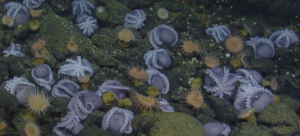 Symbiosis is a form of interaction between organisms of different species in which participants are closely and often long-term associated. These relationships can be mutually beneficial (mutualism), neutral for one participant (commensalism), or even harmful (parasitism). However, in extreme environments, mutualism is the most common form, as it increases the survival chances of both partners.
In harsh environments, resources are limited, and environmental factors — temperature, pressure, or chemical composition — can be devastating for most life forms. Here, organisms are more likely to cooperate than compete. They combine their functions, creating systems that compensate for the weaknesses of individual participants.
For example, one organism may synthesize organic compounds from inorganic substances, while another provides protection or a stable habitat. This interdependence makes the system more resilient than each element on its own.
In extreme environments, symbiosis is often obligatory: organisms cannot exist without one another. This is especially true for microorganisms and simple life forms, where the boundaries between individual organisms become less distinct.
Thus, symbiosis serves not merely as a form of interaction but as a fundamental principle of life organization in extreme ecosystems.
Hydrothermal Vents: Life Without Sunlight
One of the most well-known examples of extreme ecosystems is hydrothermal vents on the ocean floor. These systems exist at great depths, where pressure is enormous, water temperatures can exceed 300°C, and sunlight is completely absent.
Despite these conditions, complex and diverse communities of organisms thrive around hydrothermal vents. At the base of these ecosystems are chemosynthetic bacteria, which obtain energy not from sunlight but from chemical reactions, such as the oxidation of hydrogen sulfide.
A striking example of symbiosis is the giant tube worm (Riftia pachyptila). These worms lack a digestive system and rely entirely on bacteria living inside their tissues. The bacteria convert chemical compounds into organic nutrients for the worms, while the worms provide the bacteria with necessary chemicals and a protected environment.
Similar symbiotic relationships are observed in other organisms, such as certain mollusks and crustaceans. In these systems, bacteria act as “producers,” and their hosts as “consumers,” resembling food chains in more familiar ecosystems.
This example is particularly important because it demonstrates the possibility of life without sunlight, a discovery that has been key in supporting the hypothesis that life could exist in extreme conditions on other planets and moons.
Extreme Terrestrial Environments: Deserts, Glaciers, and Acidic Springs
Symbiotic relationships are also widespread in extreme terrestrial environments, where environmental factors pose significant challenges to life.
In deserts, where temperatures fluctuate dramatically and water is scarce, lichens play a crucial role. They represent a symbiosis between fungi and photosynthetic organisms — algae or cyanobacteria. The fungus protects the partner from desiccation and extreme temperatures, while the photosynthetic component produces organic nutrients. Thanks to this partnership, lichens can survive where other life forms cannot.
In polar regions, where temperatures often drop well below freezing, unique symbiotic microbial communities exist. Some of these organisms live within ice or beneath its surface, forming stable systems. Their interactions allow metabolism to continue even under extremely low temperatures.
Acidic springs and geothermal areas are another type of extreme environment. Here, microorganisms survive at very low pH and in the presence of toxic chemicals. Symbiosis allows these organisms to utilize resources more efficiently and protect themselves from harsh conditions.
Biofilms are an interesting example in these environments. Within biofilms, different bacterial species interact, creating a protective matrix that increases the resilience of the entire system.
These examples demonstrate that symbiosis is a universal strategy, manifesting in diverse conditions and forms.
The Significance of Studying Symbiosis for Science and Technology
Studying symbiotic systems in extreme environments is important for various scientific and practical fields.
First, it expands our understanding of the limits of life. Extremophiles show that life can exist in conditions previously considered completely inhospitable. This is particularly relevant to astrobiology, as it suggests the potential existence of life on other planets and moons, such as Europa or Enceladus.
Second, these systems inspire the development of new technologies. For instance, chemosynthetic processes could be used to develop alternative energy sources or waste processing methods.
Third, extremophiles provide unique biological molecules. Enzymes that function at high temperatures or extreme pH are already applied in industry, medicine, and biotechnology.
Moreover, symbiotic systems can serve as models for sustainable and self-organizing systems. They demonstrate how cooperation can provide stability even in adverse conditions. This can inform not only biology but also environmental management and social sciences.
Therefore, studying symbiosis extends far beyond biology, influencing technology, scientific research, and our understanding of life itself.
Comparison of Symbiotic Systems in Extreme Environments
| Ecosystem | Conditions | Symbiotic Participants | Main Function |
|---|---|---|---|
| Hydrothermal vents | High temperature, high pressure, no sunlight | Tube worms and bacteria | Chemosynthesis and nutrition |
| Deserts | Drought, high temperatures | Lichens (fungus + algae/cyanobacteria) | Protection and photosynthesis |
| Polar regions | Low temperatures | Microorganisms in ice | Metabolism maintenance |
| Acidic springs | Low pH, toxic environment | Extremophilic bacteria | Adaptation and protection |
Key Takeaways
- Symbiosis is a key mechanism for survival in extreme environments.
- Life can exist without sunlight through chemosynthesis.
- Symbiotic systems occur both in the ocean and on land.
- Studying these systems is crucial for science, technology, and understanding the limits of life.
Conclusion
Symbiosis in extreme environments demonstrates the remarkable flexibility and adaptability of life. These systems show that cooperation between organisms is a powerful tool for survival, even under the harshest conditions. Studying such interactions not only expands our knowledge of nature but also opens new opportunities for technological and scientific advancement. It also enhances our understanding of life’s resilience and the interconnectedness of organisms on Earth, offering insights that may guide future discoveries both on our planet and beyond.
