


The idea of terraforming Mars occupies a unique place in modern scientific and philosophical thought, lying at the intersection of astrophysics, engineering, ecology, and ethics. The Red Planet, which shares several similarities with Earth—such as a comparable day length, seasonal changes, and evidence of ancient water—is considered the most likely candidate for humanity’s expansion beyond its home planet. However, transforming Mars into a habitable environment is not merely a technological challenge but a complex set of scientific, moral, and civilizational issues.
Terraforming involves altering a planet’s climate and geochemical conditions to make it suitable for Earth-based life. In the case of Mars, this would require increasing temperature, thickening the atmosphere, creating a stable hydrosphere, and, in the long term, developing a self-sustaining biosphere. Despite significant interest in this concept, it remains highly debated: some researchers view it as an inevitable stage of human progress, while others consider it premature and potentially dangerous. Importantly, although terraforming is often seen as a futuristic concept, real-world projects aimed at the gradual exploration of Mars are already underway, giving the topic practical relevance.
Scientific Feasibility: Climate, Atmosphere, and Resources
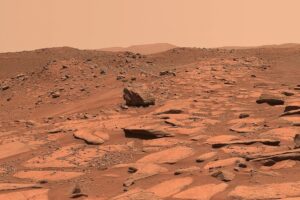 Scientific data obtained from Mars missions suggest that the planet once had more favorable conditions. Geological formations resembling river valleys and lake basins, as well as minerals formed in the presence of water, indicate that liquid water existed billions of years ago. This provides grounds to believe that Mars could, at least partially, be restored to a warmer and wetter state.
The main obstacle is the extremely thin atmosphere, composed primarily of carbon dioxide. Atmospheric pressure is far too low to sustain liquid water on the surface, and the average temperature remains well below freezing. Additionally, the lack of a global magnetic field leaves the planet exposed to solar wind, which gradually strips away atmospheric gases into space.
One of the key proposed strategies for terraforming is enhancing the greenhouse effect. In theory, this could be achieved by releasing carbon dioxide trapped in polar ice caps and the Martian regolith. Additional proposals include introducing artificial greenhouse gases to significantly raise surface temperatures. More radical concepts involve placing giant mirrors in orbit to concentrate sunlight on the planet.
Another crucial step would be the establishment of a stable water cycle. As temperatures rise, subsurface ice could begin to melt, forming temporary bodies of water. However, without sufficient atmospheric pressure, water would quickly evaporate or freeze, making the process highly interdependent.
At later stages, scientists propose introducing microorganisms capable of surviving extreme conditions. These organisms could gradually alter the atmospheric composition, potentially increasing oxygen levels. However, this process would take thousands or even millions of years and would require long-term environmental stability.
Thus, from a scientific perspective, terraforming Mars is only conceivable as a long-term process involving the resolution of multiple interconnected challenges, each of which is highly complex.
Technological Constraints and Practical Feasibility
Even with theoretical models in place, the practical implementation of terraforming faces significant technological barriers. The primary issue is scale: transforming an entire planet requires resources and energy far beyond current human capabilities.
One of the main challenges is energy supply. Heating the Martian atmosphere and surface would demand enormous amounts of energy, potentially exceeding global energy consumption on Earth. Developing and transporting the necessary infrastructure represents a major obstacle in itself.
Another critical issue is atmospheric retention. Even if the atmosphere could be thickened, the absence of a magnetic field would lead to the gradual loss of gases into space. Some scientists have proposed creating an artificial magnetic field using large orbital structures, but such technologies remain theoretical.
Logistical challenges are also substantial. Transporting equipment, materials, and personnel to Mars requires highly complex and expensive systems. Even current robotic missions demonstrate how difficult interplanetary operations can be.
In this context, modern Mars exploration projects play an essential role. Space agencies such as NASA are already implementing programs aimed at preparing for human missions in the coming decades. Robotic systems, including rovers and autonomous drones, are actively studying the Martian surface, analyzing soil composition, and searching for signs of water. These missions provide the scientific and technological foundation for future human presence.
At the same time, private companies, most notably SpaceX, are developing concepts for reusable spacecraft and infrastructure to transport cargo and people to Mars. Although these projects remain in development and face numerous challenges, they mark a transition from theoretical discussion to practical action.
Additionally, research is being conducted on closed ecological systems, in-situ resource utilization, and biotechnologies, all of which may be crucial for sustaining future Martian settlements.
Nevertheless, despite these advancements, technological limitations remain significant, and large-scale terraforming is still a distant prospect.
Ethical Dilemmas and Global Responsibility
Beyond scientific and technological considerations, terraforming Mars raises fundamental ethical questions. One of the most important concerns is whether humanity has the right to alter the natural environment of another planet.
Supporters argue that expanding human habitation is a natural stage of цивилизационное развитие. Given Earth’s limited resources and growing population, exploring other planets may be seen as a strategic necessity, with Mars serving as a potential “second Earth.”
However, critics warn that such вмешательство could destroy potential extraterrestrial life. Even microbial life on Mars would have immense scientific value, and its destruction would represent an irreversible loss for science.
Another issue is planetary responsibility. Some scholars argue that humanity must first learn to manage Earth sustainably before attempting to transform other worlds. Current environmental challenges suggest that humanity has not yet achieved this level of responsibility.
Questions of governance and fairness also arise. Who will control the process of terraforming? Will Mars belong to all humanity, or will it be dominated by individual nations or corporations? These issues extend beyond science into politics, economics, and international law.
Thus, terraforming Mars is not only a technical challenge but also a profound moral dilemma requiring global discussion and regulation.
Future Prospects and Alternative Approaches
Despite significant challenges, interest in Mars continues to grow. Current projects indicate that humanity has already entered the stage of practical preparation for its exploration, even if large-scale planetary transformation remains far in the future.
The most realistic near-term scenario is the development of autonomous settlements that do not require full terraforming. These may include sealed habitats, in-situ resource utilization, and closed-loop ecosystems. This approach reduces risks and costs and is already being actively developed.
In the long term, partial terraforming may become possible, focusing on localized environmental improvements. This could involve creating regions with higher temperatures and pressure, allowing for more sustainable human activity.
Full terraforming, as often depicted in science fiction, remains the most ambitious and least attainable scenario, likely requiring centuries or even millennia. Nevertheless, even if it is never fully realized, Mars exploration already приносит значительные выгоды. It drives technological innovation, deepens scientific understanding, and promotes international cooperation.
Key Takeaways
- Terraforming Mars is theoretically possible but requires solving complex atmospheric and climatic challenges.
- Current projects (NASA, SpaceX, and others) are already laying the groundwork for future exploration and colonization.
- Existing technologies are insufficient for full-scale terraforming in the near future.
- The concept raises serious ethical concerns and questions of global responsibility.
Conclusion
Terraforming Mars represents one of the most ambitious ideas in human history, combining scientific, technological, and ethical dimensions. While humanity has already begun taking practical steps toward exploring the Red Planet, the path to transforming it remains long and uncertain. The future of Mars will depend not only on technological progress but also on humanity’s ability to act responsibly, balancing scientific ambition with ethical considerations for the benefit of present and future generations.
