


Beneath the apparent stillness of matter lies constant motion. At scales far smaller than atoms, the universe pulses with activity—particles oscillate, fields fluctuate, and energy appears and disappears in fleeting moments. This hidden rhythm, governed by quantum mechanics, shapes everything from the stability of atoms to the technologies that define modern life. Understanding the quantum “heartbeat” offers a deeper view of reality, where even emptiness is alive with motion.
What Do We Mean by a Quantum Rhythm
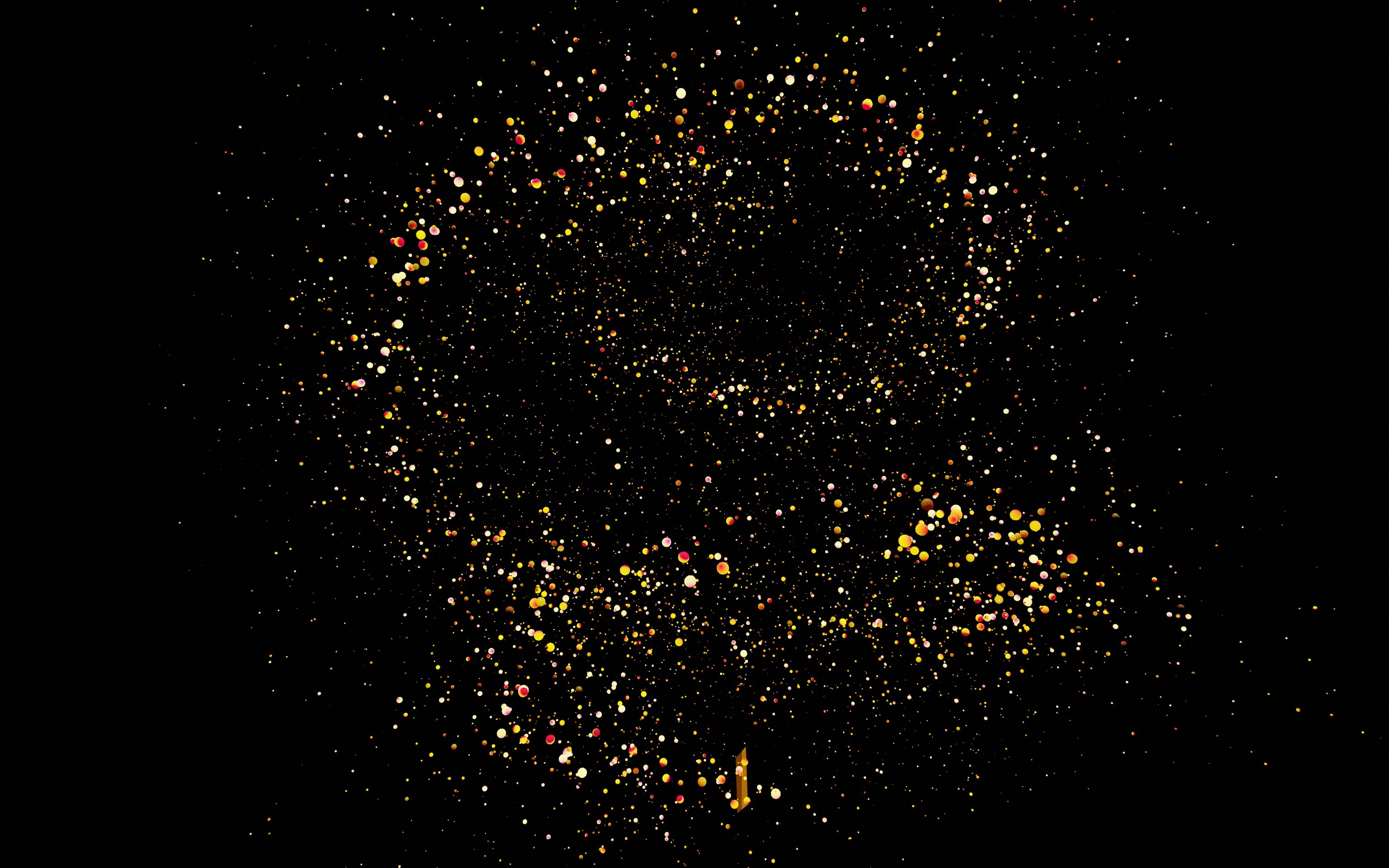
In everyday life, rhythm implies repetition: a beating heart, a ticking clock, a vibrating string. In the quantum world, rhythm exists too—but it follows unfamiliar rules.
Quantum rhythms arise from the wave-like nature of matter and energy. Particles are not fixed points; they are described by probabilities that oscillate in time and space. Electrons vibrate around atomic nuclei, photons oscillate as electromagnetic waves, and quantum fields fluctuate even in their lowest-energy states.
These rhythms are not always regular or predictable. They can interfere, synchronize, collapse, or suddenly change when observed. Yet together, they form the underlying tempo of the universe.
Waves, Not Particles: The Foundation of Quantum Motion
At the core of quantum mechanics lies a radical idea: everything behaves like a wave.
Matter as a Wave
In classical physics, waves and particles are distinct. Quantum physics dissolves this boundary. Electrons, protons, and even entire atoms exhibit wave-like behavior, described by wave functions that oscillate according to precise mathematical rules.
These oscillations determine where a particle is likely to be found and how it will interact with others. The “frequency” of a quantum wave is directly linked to energy, meaning energy itself has an inherent rhythm.
Superposition and Interference
Quantum waves can exist in multiple states simultaneously, a phenomenon known as superposition. When these states overlap, they interfere—sometimes reinforcing each other, sometimes canceling out.
This interference pattern is a form of rhythm, shaping atomic structures, chemical reactions, and the behavior of light. Without it, matter would not hold together in stable forms.
Zero-Point Energy: Motion in Apparent Stillness
Even at absolute zero, where classical physics predicts complete stillness, the quantum world continues to move.
The Unavoidable Quantum Pulse
Zero-point energy is the lowest possible energy a quantum system can have, yet it is not zero. Particles continue to fluctuate due to the uncertainty principle, which forbids perfect stillness.
This ever-present motion is like a background heartbeat of the universe. It influences atomic stability, prevents matter from collapsing, and contributes to measurable effects such as the Casimir force—an attraction between objects caused by quantum fluctuations in empty space.
Vacuum as a Dynamic Medium
In quantum physics, the vacuum is not empty. It is filled with fluctuating fields that constantly oscillate. These fluctuations can briefly create particle-antiparticle pairs before they annihilate, leaving behind subtle but real effects.
The idea that “nothing” has a rhythm challenges classical intuition and reshapes our understanding of space itself.
Quantum Oscillations Inside Atoms
Atoms are not static structures; they are dynamic systems defined by quantum rhythms.
Electron Orbitals as Standing Waves
Electrons do not orbit nuclei like planets around a star. Instead, they occupy orbitals—standing wave patterns that represent stable quantum oscillations.
Each orbital corresponds to a specific energy and frequency. Transitions between orbitals occur when electrons absorb or emit energy, often in the form of light. This process gives rise to atomic spectra, the unique “fingerprints” of elements.
The Clockwork of Atomic Time
These transitions are so regular that they serve as the basis for atomic clocks, the most precise timekeeping devices ever created. By tuning into the natural quantum rhythm of atoms, humanity has defined time with extraordinary accuracy.
Quantum Beats and Coherence
When quantum systems interact, their rhythms can align or clash in remarkable ways.
Quantum Beats
In certain conditions, quantum states with slightly different energies can interfere, producing oscillations known as quantum beats. These beats reveal information about energy differences and interactions within a system.
They are observed in atomic physics, molecular spectroscopy, and even biological systems where quantum coherence plays a role.
Coherence and Decoherence
Quantum coherence refers to the preservation of well-defined phase relationships between quantum states. It allows systems to maintain synchronized rhythms.
However, interaction with the environment causes decoherence, disrupting these rhythms and giving rise to classical behavior. This transition explains why quantum effects are difficult to observe in everyday objects but dominate at microscopic scales.
The Quantum Rhythm of Light
Light is one of the most accessible expressions of quantum oscillation.
Photons and Frequency
Light consists of photons, each associated with a specific frequency. These frequencies determine color, energy, and interaction with matter.
From radio waves to gamma rays, the electromagnetic spectrum is a vast range of quantum rhythms, each with distinct physical effects.
Lasers: Harnessed Synchrony
Lasers work by forcing photons into coherent states where their oscillations are perfectly synchronized. This artificial alignment of quantum rhythms produces intense, focused beams of light used in medicine, communication, manufacturing, and science.
Quantum Time: Does the Universe Have a Beat?
At the deepest level, quantum mechanics raises profound questions about time itself.
Time as an Emergent Rhythm
Some theories suggest that time may emerge from quantum processes rather than exist as a fundamental background. In this view, the passage of time is linked to changes in quantum states—the universe “ticks” because its smallest components evolve.
Clocks Made of Particles
Experiments with quantum clocks, built from oscillating particles, probe how time behaves under extreme conditions. These studies explore whether time flows differently at microscopic scales and how it connects to gravity.
Technology Tuned to Quantum Rhythms
Modern technology increasingly relies on precise control of quantum motion.
Quantum Computing
Quantum computers use qubits that oscillate between states, exploiting superposition and interference. Computation becomes a matter of guiding quantum rhythms toward useful outcomes.
Maintaining coherence—keeping the rhythm stable—is one of the greatest challenges in this field.
Sensors and Communication
Quantum sensors detect tiny changes in gravitational fields, magnetic fields, and time by monitoring subtle shifts in quantum oscillations. Quantum communication systems use entangled particles whose rhythms remain linked across distance.
These technologies demonstrate that understanding quantum motion is not merely theoretical—it has practical power.
The Universe as a Symphony of Scales
From subatomic particles to galaxies, rhythms exist at every level of reality.
Quantum oscillations underlie atomic stability, chemical bonding, and energy transfer. These processes scale up to shape stars, planets, and biological systems. The universe does not move randomly; it resonates across scales, with quantum rhythms setting the foundation.
Recognizing this continuity dissolves the boundary between the microscopic and the cosmic.
Key Takeaways
- Quantum mechanics reveals constant motion even at the smallest scales.
- Matter and energy behave as waves with intrinsic frequencies.
- Zero-point energy ensures that absolute stillness is impossible.
- Atomic structure and timekeeping rely on stable quantum oscillations.
- Coherence and interference shape quantum behavior and technology.
- Light is a direct manifestation of quantum rhythm.
- Modern technologies increasingly depend on controlling quantum motion.
Conclusion
The quantum heartbeat of the universe is subtle, relentless, and fundamental. It pulses beneath atoms, within light, and through the fabric of space itself. By tuning into these smallest rhythms, science uncovers a universe that is never truly at rest—only changing tempo. Understanding this hidden motion does more than explain nature; it reveals a cosmos defined not by stillness, but by perpetual, intricate movement.
