


Human history is not only a record of well-known events and great civilizations but also a vast landscape of lost cultures, forgotten cities, and vanished societies whose traces remained hidden for centuries. Archaeology plays a crucial role in reconstructing these missing chapters of the past, allowing us not only to understand how ancient people lived but also to rethink modern interpretations of historical development.
Particularly valuable are concrete archaeological discoveries that demonstrate the diversity of human societies. Examples such as Pompeii, Machu Picchu, and the Maya civilization help us not only study individual cultures but also identify broader patterns of growth and decline.
Archaeology as a Tool for Reconstructing the Past
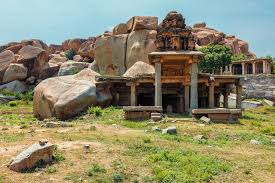 Archaeology represents a unique combination of science, technology, and interpretation. It extracts information from material remains—buildings, artifacts, and burial sites—and turns them into evidence of ancient life.
One of the most striking examples is Pompeii, a city destroyed by the eruption of Mount Vesuvius in 79 CE. Unlike many other ancient settlements, Pompeii was preserved almost intact under layers of volcanic ash. This allowed archaeologists to reconstruct everyday life in remarkable detail, including homes, frescoes, household objects, and even the final moments of its inhabitants.
Another important example is Machu Picchu, an Inca city located in the remote mountains of Peru. Its discovery in the early 20th century revealed the advanced engineering and architectural achievements of the Inca civilization, as well as their ability to adapt to challenging environmental conditions.
Modern technologies have further expanded archaeological capabilities. For instance, LiDAR scanning has uncovered hidden Maya cities beneath dense jungle canopies. These findings have reshaped our understanding of population size and urbanization in ancient Central America.
Thus, archaeology does not merely uncover ancient objects—it reconstructs complex systems of life that were previously unknown.
Causes of the Decline of Cities and Civilizations
One of the most important questions archaeology addresses is why entire societies disappear. Concrete examples help clarify these processes.
Pompeii represents a case of sudden catastrophe. The volcanic eruption caused immediate destruction. However, such abrupt endings are relatively rare.
A more complex case is the Maya civilization. Their cities were not destroyed at once but gradually declined. Archaeological evidence suggests a combination of factors: climate change, resource depletion, internal conflicts, and overpopulation.
Another significant example is Angkor, the capital of the Khmer Empire in present-day Cambodia. The city relied on a sophisticated water management system, but climate shifts and possibly its mismanagement contributed to its gradual decline.
Easter Island provides another example, where the collapse of society is often linked to excessive exploitation of natural resources, particularly deforestation. This led to ecological crisis and social transformation.
These examples demonstrate that the fall of civilizations rarely has a single cause. It is usually the result of complex interactions between environmental and human factors.
The Impact of Archaeological Discoveries on Modern Historical Understanding
Archaeological discoveries significantly reshape our understanding of history, and specific examples are central to this process.
The discovery of Troy, once considered a myth, showed that literary sources can have real historical foundations. This changed how scholars view ancient texts as sources of knowledge.
Research on the Indus Valley civilization (Harappa and Mohenjo-Daro) revealed advanced urban planning, sanitation systems, and social organization, placing it among the earliest great civilizations.
Findings in China, such as the Terracotta Army of Emperor Qin Shi Huang, demonstrated the scale and organizational power of ancient states, highlighting the development of centralized authority and culture.
Archaeology also broadens the geographical scope of history. Discoveries in Africa, for example, have revealed complex societies that were previously underestimated in global historiography.
Thus, archaeological findings do not merely add to history—they transform its interpretation.
Lessons from Lost Civilizations for the Modern World
The study of lost civilizations has practical relevance, and specific examples make these lessons especially clear.
The history of Easter Island illustrates the dangers of environmental instability. Overexploitation of resources led to ecological collapse, which contributed to the decline of society. This serves as a warning for the modern world facing environmental challenges.
The Maya civilization shows how climate change can influence social stability. Droughts and deteriorating living conditions intensified conflicts and accelerated decline.
Angkor highlights the importance of sustainable infrastructure. Even complex engineering systems can become vulnerable under changing environmental conditions.
Pompeii serves as a reminder of the power of natural disasters and the importance of considering environmental risks in urban planning.
All these examples emphasize that the resilience of a society depends on its ability to adapt to change and manage resources wisely.
Key Takeaways
- Archaeology reveals the past through concrete examples of lost cities.
- The decline of civilizations is caused by complex and multiple factors.
- Discoveries reshape historical understanding and expand its geographical scope.
- The past offers practical lessons for the modern world.
Conclusion
Examples of lost cities and civilizations make history more tangible and understandable. They demonstrate that societal development is a complex process influenced by many factors. Archaeology not only reconstructs the past but also provides valuable lessons that remain relevant today.
