
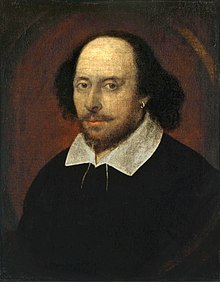
William Shakespeare Page 39
We found 189 free papers on William Shakespeare
Essay Examples
Overview
Women in Hamlet by William Shakespeare
Hamlet
Women
In William Shakespeare’s Hamlet, the roles of women are dependent on men. There are only two women in the play who have a direct relationship with Hamlet. Ophelia, who looked up greatly towards Polonius, Laertes who has a great influence on her life as well as Hamlet. The other female role is Gertrude, Hamlets mother…
Analyse the rise and fall of Macbeth Analysis
Macbeth
From 1603 to 1606, William Shakespeare penned ‘Macbeth’, a play that aligned with James I’s rise to power in England. James I, formerly known as James the Sixth of Scotland, held firm beliefs in his own greatness as a monarch and possessed a keen fascination for witchcraft, apparitions, and ghosts. The utilization of sorcery in…
Racism and Feminism In Othello
Feminism
Othello
Racism
William Shakespeare’s tragic play Othello was written in 18th century England. Influenced by the ideas of the Renaissance and Enlightenment period, the tragedy was not so much man’s resistance to destiny. In subtle ways, the play points to nuances of racism and feminism from its characters. William Shakespeare’s Othello is a general and thus also…
Hamlet: Appearance vs. Reality
Hamlet
One of the most renowned and well-liked authors and script writers is William Shakespeare. Shakespeare has consistently demonstrated his ability to develop captivating characters, and their complexity lies in the distinction between their inner and outer selves. This is particularly evident in the characters of Hamlet, as they prompt an exploration of appearance versus reality….
Lady Macbeth: A Wife in Support of Her Husband
Macbeth
Despite frequent criticism, Shakespeare did not intend for Lady Macbeth, a main character in Macbeth, to be harshly judged. Instead, her actions, relationship with Macbeth, and death should be used to evaluate her character. It is possible that Shakespeare wanted readers to judge Lady Macbeth based on Macbeth’s own actions. While some may view her…
Iago’s Soliloquies display ‘the Motive Hunting of a Motiveless Malignity’
Hunting
Iago
The quotation by Coleridge describes Iago’s soliloquies as having ‘the motive hunting of a motiveless malignity’. Coleridge has interpreted Iago using soliloquies in an attempt to justify his actions throughout the book, and that not only his actions have ‘motiveless malignity’ but in fact he is a ‘motiveless malignity’, in other words he is doing…
Romeo’s role in “Romeo and Juliet” as the tragic hero.
Romeo And Juliet
Tragic Hero
Romeo: The Tragic Hero Like most Shakespearean plays, “Romeo and Juliet” exemplifies Shakespearean astonishing comprehension and ability to write tragic plays. The simplest definition of “tragedy,” a serious disaster or a sad event, blatantly describes the horrific story of two “star crossed lovers. ” While reading the fatal tale of Shakespearean novel, Romeo and Juliet,…
Othello and Desdemonas Relationship
Iago
Relationship
Question: In Othello, it is the representation of intense human relationships that captivates audiences. Evaluate the significance of at least one intense relationship in the play. Othello is a Shakespearean tragedy written by William Shakespeare in the early seventeenth century. The play aims to contrast, through setting, staging, and language, the social order imposed by…
Romeo and Juliet – Play vs. Movie
Movie
Romeo And Juliet
Since we now eve the ability to see a movie, the director had to change some of the story to help us visualize some Of the scenes. One such example is when, in the play, Table recognizes Romeos voice at the Caplet masked ball. When Table hears him, he becomes enraged. In the film this…
Hamlet character analysis
Character Analysis
Hamlet
Character AnalysisRosencrantz and Guildentstern are two characters that are courtiers and they assist the King of Denmark in his plots against Hamlet. The Two characters are so similar in many ways they should be considered as a unit. King Claudius and the Queen asked Rosencrantz and Guildenstern to come to Denmark and spy on Hamlet….
| born | April 15, 1564, Stratford-upon-Avon, United Kingdom |
|---|---|
| died | April 23, 1616, Stratford-upon-Avon, United Kingdom |
| description | William Shakespeare was an English playwright, poet, and actor, widely regarded as the greatest writer in the English language and the world's greatest dramatist. He is often called England's national poet and the "Bard of Avon". |
| children | Hamnet Shakespeare, Susanna Hall, Judith Quiney |
| movies | Romeo + Juliet 1996, 10 Things I Hate About You 1999, Romeo and Juliet 1968 |
| quotations | “The fool doth think he is wise, but the wise man knows himself to be a fool.” “Love all, trust a few, do wrong to none.” “Love looks not with the eyes, but with the mind, “Be not afraid of greatness. “Doubt thou the stars are fire; |
| information | Short biography of William ShakespeareWilliam Shakespeare was an English poet and playwright who is considered one of the greatest writers in the English language. He was born in Stratford-upon-Avon in Warwickshire, England, in 1564, and his plays are still performed today more than 400 years after his death. Shakespeare is also renowned for his sonnets, which are among the finest in the English language. Shakespeare was born on April 23rd, 1564 in Stratford-upon-Avon. His father John Shakespeare served as a local magistrate, but died when Will was only 11 years old. The family then fell on hard times and Will had to leave school to help out his mother Joan with their finances. A few years later, he went back to school where he studied Latin literature and rhetoric under Thomas Jenkins at the Free School in Stratford on Avon. When Will left school in 1582 he joined a group of traveling players which included Richard Burbage (who would later play many roles in Shakespeare’s plays) and Edward Alleyn (an actor manager). This group performed throughout England until 1587 when they disbanded due to lack of funds. General Essay Structure for this Topic
Important informationSpouse: Anne Hathaway (m. 1582–1616) Poems: Shakespeare’s Sonnets, Shall I compare thee to a summer’s day?, Sonnet 116, Sonnet 130 Plays: Romeo and Juliet 1597, Hamlet 1603, Macbeth 1606 |
