
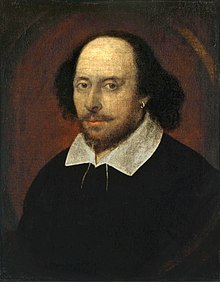
William Shakespeare Page 48
We found 189 free papers on William Shakespeare
Essay Examples
Overview
Romeo And Juliet – Contrast in Language
Romeo And Juliet
Contrast Between Language of Love in the Balcony Scene and the Language of Death in the Final Scene of Romeo and JulietIn William Shakespeare’s Romeo and Juliet, Shakespeare introduces many themes that he continues throughout all of his tragedies, including the language of love vs. the language of death. The balcony scene is the most…
Macbeth Character Development
Character Analysis
Macbeth
Use this graphic organizer to collect your thoughts about characterization in Macbeth. As you read each scene, record what you learn about the character. Add the line from the play that supports your idea. Lady Macbeth Observations: Text Support: Looks: Lady Macbeth looks like a serious, ambitious woman who is not afraid to go after…
Macbeth Research Paper Nostalgia in
Macbeth
Bienvenido Santos’ short narrative “When the Dancers Came” shares a common theme with the rest of his stories in “Scent of Apples.” This theme explores the sense of loss experienced in the Filipino American community, whether it be a loss of home, identity, or family. In “When the Dancers Came,” Santos conveys this loss through…
Iago’s Character in Shakespeare’s Othello
Iago
Othello
In the opening scene, the play’s villain, Iago, openly declares his type of character, his intentions and his motivations. All of which then continue to underline each of his actions, as the plot continues to unfold. Through his careful twisting of the facts and opportunities that are presented to him, Imago is able to direct,…
Depth Analysis – Romeo and Juliet
Love stories
Romeo And Juliet
Romeo, the son of Montague and Lady Montague, is a young man of approximately sixteen who possesses physical attractiveness, intelligence, and sensitivity. He becomes enamored with Juliet, the daughter of his family’s sworn enemy, Capulet, immediately upon seeing her for the first time. Although he is capable of experiencing deep affection, Romeo is not merely…
Explain How Racism Is Used in the ‘Merchant of Venice’
Racism
The Merchant of Venice
Racism is used in by many people and societies throughout the ‘Merchant of Venice’. Some can be brutal and some not that ruthless. From black people to ‘Jews’, you will find many of the cruel jokes and remarks in this book. Some examples include different religions mocking other religions like the Christians and the Jewish…
Different Stages of Development in Macbeth
Macbeth
In the majority of stories, the main character or protagonist experiences character development and a change in their mindset by the conclusion of the narrative. These changes typically occur at different stages of the plot, such as the introduction, beginning excitement, rising action, climax, falling action, and conclusion. Freytag’s pyramid illustrates the typical structure for…
Character of Iago in Shakespeare’s Othello Character Analysis
Iago
Othello
‘Exceeding Honesty’ Investigating the Heroic trait in the Character of Iago in Shakespeare’s Othello Talking about Iago in his introduction to the play ‘Othello’, A.L. Rowse is of the opinion: He (Iago) and Othello stand out as two protagonists in the simple and haunting tragedy, Desdemona their sacrificial victim. (Rowse 271) In the four and…
Analysis of Hamlet the Plays Main Character
Hamlet
Play
Whether we are planning to build a boat or hoping to write a good essay, theonly way to go about these tasks is to make a detailed plan of all the stepsthat need to be taken in order to get the desired result. If you spontaneouslydecide to build a boat, the result may be a…
Romeo and Juliet appropriation
Romeo And Juliet
An appropriation is when a composer takes a text and transforms it for a specific purpose or audience. It involves capturing the essence of the original text and changing it for a different use. This analysis focuses on two texts: Shakespeare’s Romeo and Juliet and Bag Learner’s 1996 film adaptation of Romeo and Juliet. In…
| born | April 15, 1564, Stratford-upon-Avon, United Kingdom |
|---|---|
| died | April 23, 1616, Stratford-upon-Avon, United Kingdom |
| description | William Shakespeare was an English playwright, poet, and actor, widely regarded as the greatest writer in the English language and the world's greatest dramatist. He is often called England's national poet and the "Bard of Avon". |
| children | Hamnet Shakespeare, Susanna Hall, Judith Quiney |
| movies | Romeo + Juliet 1996, 10 Things I Hate About You 1999, Romeo and Juliet 1968 |
| quotations | “The fool doth think he is wise, but the wise man knows himself to be a fool.” “Love all, trust a few, do wrong to none.” “Love looks not with the eyes, but with the mind, “Be not afraid of greatness. “Doubt thou the stars are fire; |
| information | Short biography of William ShakespeareWilliam Shakespeare was an English poet and playwright who is considered one of the greatest writers in the English language. He was born in Stratford-upon-Avon in Warwickshire, England, in 1564, and his plays are still performed today more than 400 years after his death. Shakespeare is also renowned for his sonnets, which are among the finest in the English language. Shakespeare was born on April 23rd, 1564 in Stratford-upon-Avon. His father John Shakespeare served as a local magistrate, but died when Will was only 11 years old. The family then fell on hard times and Will had to leave school to help out his mother Joan with their finances. A few years later, he went back to school where he studied Latin literature and rhetoric under Thomas Jenkins at the Free School in Stratford on Avon. When Will left school in 1582 he joined a group of traveling players which included Richard Burbage (who would later play many roles in Shakespeare’s plays) and Edward Alleyn (an actor manager). This group performed throughout England until 1587 when they disbanded due to lack of funds. General Essay Structure for this Topic
Important informationSpouse: Anne Hathaway (m. 1582–1616) Poems: Shakespeare’s Sonnets, Shall I compare thee to a summer’s day?, Sonnet 116, Sonnet 130 Plays: Romeo and Juliet 1597, Hamlet 1603, Macbeth 1606 |
