
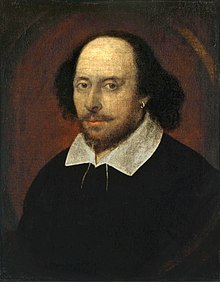
William Shakespeare Page 62
We found 189 free papers on William Shakespeare
Essay Examples
Overview
Romeo and Juliet Revenge and Violience Now and Then
Romeo And Juliet
Violence
“There are four basic human needs; food, sleep, sex and revenge. ” ? Banks Shakespearean play Romeo and Juliet is set in a time when revenge and violence were very common. We live today in what some would say, are very violent times. The reasons that people seek revenge and why they commit violence has…
The Reason for Bloodbath is The Othello’s Tragic Flaw.
Iago
Othello
Othello’s Tragic Flaw For every Shakespearean tragedy there is a grossly unfortunate sequence of events that eventually leads to a bloodbath. The reason for this bloodbath is the tragic flaw. The tragic flaw is the small character defect in the protagonist that, in most circumstances, wouldn’t have been a big problem if not for said…
The Tempest: the Characters Face Challenges
The Tempest
The Tempest demonstrates fortune as a theme throughout the story. It may be difficult to see how this play demonstrates luck, but if looked at from the right angle it can be found. In the play there are many times when things look bleak, but if you look for the silver lining then you can…
Romeo And Juliet Fate Quotes
Romeo And Juliet
These cannot be undone, and so play a part in the devastating suicides of Romeo and Juliet. Early in the play, Romeo is quite desperately in love with Rosalie, a member of the Verona community. But at first sight of Caplet’s, only daughter, Juliet, Rosalie is immediately cast out of the picture and quickly proclaims…
Macbeth: annotated bibliography
Macbeth
Bell, Millicent. “Macbeth and Dismemberment.” Raritan Vol. 25 Issue 3 (2006): p13-29. Thisarticle explores and digs deeply into Macbeth’s character, his motivations for the series of horrible acts of murders he had committed, independent of any supernatural force or influence that might have moved him to action. His real, deep self is revealed and the…
Romeo and Juliet Conflict and Violence
Romeo And Juliet
Violence
The extreme violence seen in Act 3 scene 1, serves to remind the audience that despite the romantic aspect of Romeo and Juliet the play is mainly concerned with the conflicts developing from concepts of pride and honor, which were important aspects of society during Shakespearean times. The universal aspect of violence and conflict is…
Macbeth and I’m the King of the Castle Analysis
Macbeth
Both ‘Macbeth’ by William Shakespeare and ‘I’m the King of the Castle’ by Susan Hill incorporate various techniques to evoke feelings of horror and tension. Shakespeare’s ‘Macbeth’ and Hill’s ‘I’m the King of the Castle’ both employ horror and tension to depict the downfall of characters. In ‘Macbeth’, the protagonist’s pursuit of ambition is revealed…
Othello’s Arabic Character and Racism in Othello
Character Analysis
Othello
Racism
Shakespeare does not provide any clear hint about the specific ethnicity of Othello. Indeed Othello is mostly referred as “Moor” in the play. There are several other plays by Shakespeare where he refers to “Moor” and distinguishes them as a Berber Moor (in “The Merchant of Venice”) and a black Moor (in “Titus Andronicus”). But…
The Tragedy Of Romeo And Juliet Prologue Translation Analysis
Romeo And Juliet
“New love can resemble mental illness, combining mania, dementia, and obsession that isolates individuals from friends and family and leads to unexpected actions.” The initial sentence of “Watching New Love as it Sears the Brain” parallels the introductory lines of “Romeo and Juliet,” informing the reader about forthcoming events. The article explores how individuals recently…
Romeo And Juliet: They Did It To Themselves
Romeo And Juliet
Romeo and Juliet: They Did it to ThemselvesThe fall of Romeo and Juliet is a culmination of many factors. Acontrolling father, an ongoing feud and a gullible friar all contribute to thiscatastrophe, but, for the most part, it was Romeo and Juliet themselves thatlent a hand to their own doom. The two lovers were fated…
| born | April 15, 1564, Stratford-upon-Avon, United Kingdom |
|---|---|
| died | April 23, 1616, Stratford-upon-Avon, United Kingdom |
| description | William Shakespeare was an English playwright, poet, and actor, widely regarded as the greatest writer in the English language and the world's greatest dramatist. He is often called England's national poet and the "Bard of Avon". |
| children | Hamnet Shakespeare, Susanna Hall, Judith Quiney |
| movies | Romeo + Juliet 1996, 10 Things I Hate About You 1999, Romeo and Juliet 1968 |
| quotations | “The fool doth think he is wise, but the wise man knows himself to be a fool.” “Love all, trust a few, do wrong to none.” “Love looks not with the eyes, but with the mind, “Be not afraid of greatness. “Doubt thou the stars are fire; |
| information | Short biography of William ShakespeareWilliam Shakespeare was an English poet and playwright who is considered one of the greatest writers in the English language. He was born in Stratford-upon-Avon in Warwickshire, England, in 1564, and his plays are still performed today more than 400 years after his death. Shakespeare is also renowned for his sonnets, which are among the finest in the English language. Shakespeare was born on April 23rd, 1564 in Stratford-upon-Avon. His father John Shakespeare served as a local magistrate, but died when Will was only 11 years old. The family then fell on hard times and Will had to leave school to help out his mother Joan with their finances. A few years later, he went back to school where he studied Latin literature and rhetoric under Thomas Jenkins at the Free School in Stratford on Avon. When Will left school in 1582 he joined a group of traveling players which included Richard Burbage (who would later play many roles in Shakespeare’s plays) and Edward Alleyn (an actor manager). This group performed throughout England until 1587 when they disbanded due to lack of funds. General Essay Structure for this Topic
Important informationSpouse: Anne Hathaway (m. 1582–1616) Poems: Shakespeare’s Sonnets, Shall I compare thee to a summer’s day?, Sonnet 116, Sonnet 130 Plays: Romeo and Juliet 1597, Hamlet 1603, Macbeth 1606 |
