
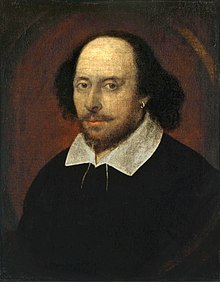
William Shakespeare Page 31
We found 189 free papers on William Shakespeare
Essay Examples
Overview
Analysis of Sonnet 130
Sonnet
Sonnet 130
In this slightly odd sonnet, he compares his beloved to everything under the sun. This was a typical gesture. He makes her seem almost unlovable, but then one sees that to him, her voice is music and everything about her is wonderful. She tops any goddess in her mortal beauty and approachability. Sonnet 130 is…
Romeo and Juliet – The Capulet and Montague Fued
Romeo And Juliet
We soon learn the surnames of the warring clans, Caplet and Montague, and both patriarchs (as well as their respective ladies) appear in the flesh in the plays first scene. Although Table of the Capsules is the most aggressive character on the stage, Americium’s twice-spoken curse, “a plague a’ both houses! ” (Ill , I….
Much Ado Bout Nothing PQA
Much Ado About Nothing
In Much Ado about Nothing by Shakespeare, the opening scene portrays the soldiers returning from war in the renaissance era, and also highlights the excitement of impatient women as prince Aragon arrives. The play follows the structure of a romantic comedy, with the central plot focusing on two pairs of young lovers. The ultimate goal…
The Uniqueness of the Play Hamlet
Hamlet
In ‘Hamlet’ Literary Remains, Samuel Taylor Coleridge describes Hamlet as an intricate planner who’s thought process is slow and methodical. He describes Hamlet as someone having ‘Supercilious activities of the mind, which, unseated from its healthy relation, is constantly occupied with the world within, and abstracted from the world without…throwing a mist over all common-place…
Romeo and Juliet Paper Analysis
Hatred
Romeo And Juliet
Desperate Times Call for Drastic Measures “Hang thee, young baggage! Disobedient wretch! ” howls Lord Capulet to Juliet in William Shakespeare’s classic Romeo and Juliet. Capulet’s words take readers by surprise in Act three Scene five since Capulet has never behaved furiously towards Juliet. Because of Capulet’s selfish interest in his own happiness, his fury…
Othello: he defencies in Iago’s character
Character Analysis
Othello
William Shakespeare, the greatest writer in history, showcases a fabricated tragedy in his famous novel Othello, where the truth about the characters ultimately emerges. Shakespeare’s unmatched ability to keenly observe and express himself has made him stand above all other writers, particularly when he captures the essence of life in the 16th century. In that…
Romeo and Juliet Internal Monologue – the Friar
Romeo And Juliet
I acknowledge the need to personally deliver this letter to Romeo instead of relying on a mailing service. It is crucial that this important letter does not fall into the wrong hands or fail to reach him altogether. The success of our plan depends on it, and I cannot bear the thought of Friar John…
“Pauls Case” by Willa Cathers
Feeling
Prison
Romeo And Juliet
Tragedy
The short story “Paul’s Case” by Willa Cather introduces us to a young man who fears becoming ordinary and unremarkable like the people and things around him. Paul is driven to escape his dull life due to how others perceive him. He feels stifled by his mundane surroundings and finds comfort in the theater, which…
The Message on Love in Famous Poems Analysis
Love
Sonnet 116
In this course the three poems that I related to the most was the ballad of a chocolate Mabbie by Gwendolyn Brooks (130) , Bonny Barbara Allen by Anonymous (132), and The Sonnet 116 by William Shakespeare (131). One of the main reason’s I found these poems the most interesting was because I was able…
“Hamlet”: A Tragic Misadventure of Revenge
Hamlet
Many of the characters in Shakespeare’s Hamlet have an unfortunate death from the results of their entire attempt to seek revenge. First Laertes ends up killing himself and Hamlet because the death of his father Polonius has maddened him, and convinced him he need to avenge Hamlet for his father. Secondly, Fortinbras is convinced he…
| born | April 15, 1564, Stratford-upon-Avon, United Kingdom |
|---|---|
| died | April 23, 1616, Stratford-upon-Avon, United Kingdom |
| description | William Shakespeare was an English playwright, poet, and actor, widely regarded as the greatest writer in the English language and the world's greatest dramatist. He is often called England's national poet and the "Bard of Avon". |
| children | Hamnet Shakespeare, Susanna Hall, Judith Quiney |
| movies | Romeo + Juliet 1996, 10 Things I Hate About You 1999, Romeo and Juliet 1968 |
| quotations | “The fool doth think he is wise, but the wise man knows himself to be a fool.” “Love all, trust a few, do wrong to none.” “Love looks not with the eyes, but with the mind, “Be not afraid of greatness. “Doubt thou the stars are fire; |
| information | Short biography of William ShakespeareWilliam Shakespeare was an English poet and playwright who is considered one of the greatest writers in the English language. He was born in Stratford-upon-Avon in Warwickshire, England, in 1564, and his plays are still performed today more than 400 years after his death. Shakespeare is also renowned for his sonnets, which are among the finest in the English language. Shakespeare was born on April 23rd, 1564 in Stratford-upon-Avon. His father John Shakespeare served as a local magistrate, but died when Will was only 11 years old. The family then fell on hard times and Will had to leave school to help out his mother Joan with their finances. A few years later, he went back to school where he studied Latin literature and rhetoric under Thomas Jenkins at the Free School in Stratford on Avon. When Will left school in 1582 he joined a group of traveling players which included Richard Burbage (who would later play many roles in Shakespeare’s plays) and Edward Alleyn (an actor manager). This group performed throughout England until 1587 when they disbanded due to lack of funds. General Essay Structure for this Topic
Important informationSpouse: Anne Hathaway (m. 1582–1616) Poems: Shakespeare’s Sonnets, Shall I compare thee to a summer’s day?, Sonnet 116, Sonnet 130 Plays: Romeo and Juliet 1597, Hamlet 1603, Macbeth 1606 |
