
William Shakespeare Page 34
We found 189 free papers on William Shakespeare
Essay Examples
Overview
To What Extent Is Othello Responsible For His Own Downfall?
Infidelity
Othello
A tragedy Is the story of an Individual whose downfall Is brought about by specific defects in his character, tragic flaws. The play, Othello, is a twisted tale of deceit and revenge. Ago creates an alternate world filled with lies, that unfortunately consumes the trusting and naive Othello. Othello downfall comes about due to a…
Romeo And Juliet Vs. The Miracle Worker
Romeo And Juliet
Romeo and Juliet is a tragic drama written by William Shakespeare. It is a love narrative between two rival households, the Montagues and the Capulets. Romeo who is a Montague falls in love with Juliet who happens to be a Capulet. It is love at first sight, but if their parents find out there will…
A Close Reading of Titus Andronicus
Titus Andronicus
Titus – Seeing the Dark Side of the Moon Titus Andronicus is a study of the conflict between personal responsibilities and duty to the state. Shakespeare establishes the character of Titus early in the play. He is a loyal subject of Rome, a commander of legions, and a career soldier who devoted his life to…
Macbeth Motifs Research Paper Macbeth Motif
Macbeth
Macbeth Motifs Essay, Research Paper Macbeth Motif Essay William Shakespeare, in his tragic drama Macbeth, written in 1606, dramatizes the grim power of misrepresentation, insanity, and greed which finally consequences in the death of Macbeth. Macbeth allowed his desire to go male monarch overrule his opinion which consummately terminated his being. The drama is full…
Romeo and Juliet and Pride and Prejudice Comparison
Pride and Prejudice
Romeo And Juliet
In pride and prejudice extract we see how in this scene Austen presents Mrs Bennet as a very manipulative and devious character when Mrs Bennet says ‘’A single man of large fortune; four or five thousand a year, what a fine thing for our girls!’’. The words ‘’ large fortune’’ imply just how determined she…
A Midsummer Nights Dream3
Midsummer Night's Dream
A Midsummer Nights Dream is a classic fairy tale of lovers and betrayers. This play has been called Shakespeares happiest comedy and it most definitely is. It is filled with humor and non-stop action. There are many different qualities in a happy play that are clearly noticeable. For example, love that is for the best…
Deception in Hamlet
Hamlet
In today’s society, it is nearly impossible to go a day without encountering deception in some form – hearing about it, witnessing it, or experiencing it ourselves. William Shakespeare explores the theme of deception extensively in his play ‘Hamlet’. The author depicts deception as a crucial tool for Hamlet and Claudia to achieve their objectives….
Deception in “Twelfth Night”
Twelfth Night
In William Shakespeare’s comedic drama. “Twelfth Night” . a repeating subject is misrepresentation. The characters in the drama used misrepresentation for a assortment of intents. Viola’s usage of misrepresentation involves her masking herself as a adult male in order to obtain a occupation with the Duke of Illyria. Orsino. On the other manus. Maria. Olivia’s…
Explore the presentation of revenge in ‘Hamlet’
Hamlet
Presentation
The theme of revenge is crucial in Hamlet, serving as a framework for the entire play and intertwining with other significant themes. While Hamlet’s revenge sets the foundation for the story, the vengeance of Laertes and Fortinbras also mirrors Hamlet’s situation in various aspects. Shakespeare brings attention to the different approaches and resolutions these avengers…
Alliteration In Romeo And Juliet
Romeo And Juliet
Elizabeth and Juliet have both rejected their parents choice of husbands In Act 3 Scene 5 in Romeo and Juliet strong feelings are portrayed through out the scene. One example of this is at the beginning of the scene Juliet shows strong emotions of grief towards Romeos leaving. Yet let me weep for such a…
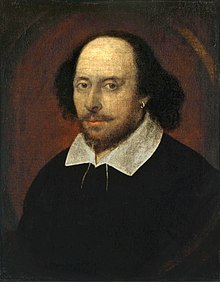
| born | April 15, 1564, Stratford-upon-Avon, United Kingdom |
|---|---|
| died | April 23, 1616, Stratford-upon-Avon, United Kingdom |
| description | William Shakespeare was an English playwright, poet, and actor, widely regarded as the greatest writer in the English language and the world's greatest dramatist. He is often called England's national poet and the "Bard of Avon". |
| children | Hamnet Shakespeare, Susanna Hall, Judith Quiney |
| movies | Romeo + Juliet 1996, 10 Things I Hate About You 1999, Romeo and Juliet 1968 |
| quotations | “The fool doth think he is wise, but the wise man knows himself to be a fool.” “Love all, trust a few, do wrong to none.” “Love looks not with the eyes, but with the mind, “Be not afraid of greatness. “Doubt thou the stars are fire; |
| information | Short biography of William ShakespeareWilliam Shakespeare was an English poet and playwright who is considered one of the greatest writers in the English language. He was born in Stratford-upon-Avon in Warwickshire, England, in 1564, and his plays are still performed today more than 400 years after his death. Shakespeare is also renowned for his sonnets, which are among the finest in the English language. Shakespeare was born on April 23rd, 1564 in Stratford-upon-Avon. His father John Shakespeare served as a local magistrate, but died when Will was only 11 years old. The family then fell on hard times and Will had to leave school to help out his mother Joan with their finances. A few years later, he went back to school where he studied Latin literature and rhetoric under Thomas Jenkins at the Free School in Stratford on Avon. When Will left school in 1582 he joined a group of traveling players which included Richard Burbage (who would later play many roles in Shakespeare’s plays) and Edward Alleyn (an actor manager). This group performed throughout England until 1587 when they disbanded due to lack of funds. General Essay Structure for this Topic
Important informationSpouse: Anne Hathaway (m. 1582–1616) Poems: Shakespeare’s Sonnets, Shall I compare thee to a summer’s day?, Sonnet 116, Sonnet 130 Plays: Romeo and Juliet 1597, Hamlet 1603, Macbeth 1606 |
