
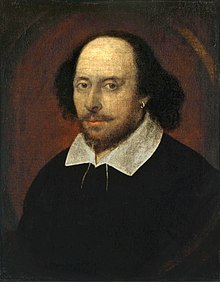
William Shakespeare Page 41
We found 189 free papers on William Shakespeare
Essay Examples
Overview
Hamlet Character Traits Sample
Character Analysis
Hamlet
Hamlet is a calamity that consists of loss. love. and retaliation. Hamlet and Laertes both want to seek retaliation in this drama. but they have different ways of traveling about it. Hamlet is a postponer and even has a whole scene where he contemplates taking retaliation on Claudius or non. he even thinks of taking…
Characteristics And Proof Of Macbeth
Character Analysis
Macbeth
Tomorrow, and tomorrow, and tomorrow…? Sometimes tomorrow never arrives, and for Macbeth, tomorrow signified another day of inner torment and guilt. This triumphant Thane quite literally became his own worst enemy once he began to put faith in the witches. Following their prophecies, Macbeth’s popularity and mental state plummeted. Despite being tempted by the witches…
Macbeth Text Response
Macbeth
The opening scene of the play sets a mysterious tone with the witches chanting “fair is foul and foul is fair.” The contradiction in their words adds to the mysterious atmosphere. Furthermore, the play begins with three witches discussing a meeting. In Scene ii, Macbeth is initially portrayed as a heroic figure for his brave…
A Midsummer Night’s Dream: How Concepts and Values are Destabilized
Midsummer Night's Dream
A Midsummer Night’s Dream: How Concepts and Values are Destabilized One of William Shakespeare’s plays, A Midsummer Night’s Dream, is argued how humorously the concepts and values are set in conflict both by humans and mystical creatures, and by manipulation, lives are intertwined. Concepts The play had destabilized the concepts on gender, ethnicity,…
Power and Greed – Macbeth
Macbeth
Power and Greed as the Driving Force behind Macbeth’s Story The story of Macbeth showcases how the rise of an individual and the acquisition of power can be intoxicating. This newfound control often awakens deep-seated thoughts and actions driven by greed. Countless leaders throughout history have put their own selfish desires above the well-being of…
Vision in king lear
King Lear
Clarity of Vision In Shakespeare’s tragedy, King Lear, a prominent reoccuring theme is vision and it’s relovence. The characters, Lear and Gloucester are Shakespeare’s principal means of portraying this theme. Although Lear can physically see, he is blind in the sense that he lacks insight, understanding, and direction. In contrast, Gloucester becomes physically blind but…
Who is more to blame for the murder of King Duncan? Macbeth or Lady Macbeth
Macbeth
In William Shakespeare’s Macbeth, the tragic hero or the great and virtuous character, Macbeth is destined for downfall as he brings suffering and defeat upon himself. However, this statement can be widely debatable, as many would assume that Lady Macbeth also plays an immense role in the murder of Duncan, the beginning of the tragedy….
Who Is Mercutio In Romeo And Juliet
Mercutio
Romeo And Juliet
During the play Shakespeare is able to exploit a number of techniques; it is through these techniques the audience is able to e what the primary problems and themes of the play are. Through exploration of this scene I aim to show how Shakespeare accomplishes this. In this scene their true feelings are revealed for…
Macbeth’s Descent Into Evil
Macbeth
The play “Macbeth” by Shakespeare presents the tragic tale of a protagonist who experiences a profound change, transforming into an amoral King. Macbeth’s decline into wickedness is influenced by several factors such as the witches, Lady Macbeth, and his ambition to maintain his reign. After reclaiming power, Macbeth must safeguard it at all costs, resulting…
Hamlet – Free Will
Destiny
Hamlet
Hamlet Essay: William Shakespeare’s tragedy ‘Hamlet: Prince of Denmark’ remains one of the most celebrated, influential texts in world history, holding continuing relevance and significance throughout history due to its detailed, multi-faceted elucidation and exploration of many core facets of human existence; such as revenge, loyalty, truth, mortality, and power. As he alludes to in…
| born | April 15, 1564, Stratford-upon-Avon, United Kingdom |
|---|---|
| died | April 23, 1616, Stratford-upon-Avon, United Kingdom |
| description | William Shakespeare was an English playwright, poet, and actor, widely regarded as the greatest writer in the English language and the world's greatest dramatist. He is often called England's national poet and the "Bard of Avon". |
| children | Hamnet Shakespeare, Susanna Hall, Judith Quiney |
| movies | Romeo + Juliet 1996, 10 Things I Hate About You 1999, Romeo and Juliet 1968 |
| quotations | “The fool doth think he is wise, but the wise man knows himself to be a fool.” “Love all, trust a few, do wrong to none.” “Love looks not with the eyes, but with the mind, “Be not afraid of greatness. “Doubt thou the stars are fire; |
| information | Short biography of William ShakespeareWilliam Shakespeare was an English poet and playwright who is considered one of the greatest writers in the English language. He was born in Stratford-upon-Avon in Warwickshire, England, in 1564, and his plays are still performed today more than 400 years after his death. Shakespeare is also renowned for his sonnets, which are among the finest in the English language. Shakespeare was born on April 23rd, 1564 in Stratford-upon-Avon. His father John Shakespeare served as a local magistrate, but died when Will was only 11 years old. The family then fell on hard times and Will had to leave school to help out his mother Joan with their finances. A few years later, he went back to school where he studied Latin literature and rhetoric under Thomas Jenkins at the Free School in Stratford on Avon. When Will left school in 1582 he joined a group of traveling players which included Richard Burbage (who would later play many roles in Shakespeare’s plays) and Edward Alleyn (an actor manager). This group performed throughout England until 1587 when they disbanded due to lack of funds. General Essay Structure for this Topic
Important informationSpouse: Anne Hathaway (m. 1582–1616) Poems: Shakespeare’s Sonnets, Shall I compare thee to a summer’s day?, Sonnet 116, Sonnet 130 Plays: Romeo and Juliet 1597, Hamlet 1603, Macbeth 1606 |
